What to put under education on a resume if you are a self-taught developer
· 8 min readIf you have no degree and no formal training, leave the education section off. Your experience, projects and skills are the evidence, and an empty heading or a paragraph about being self-taught adds nothing. If you have an unfinished degree, an unrelated degree or a bootcamp, list it in one or two accurate lines at the bottom of the resume.
This post gives a format for each of those cases, says which online courses and certificates are worth a line, and covers the application form that insists on a degree.
Do you need an education section if you are self-taught?
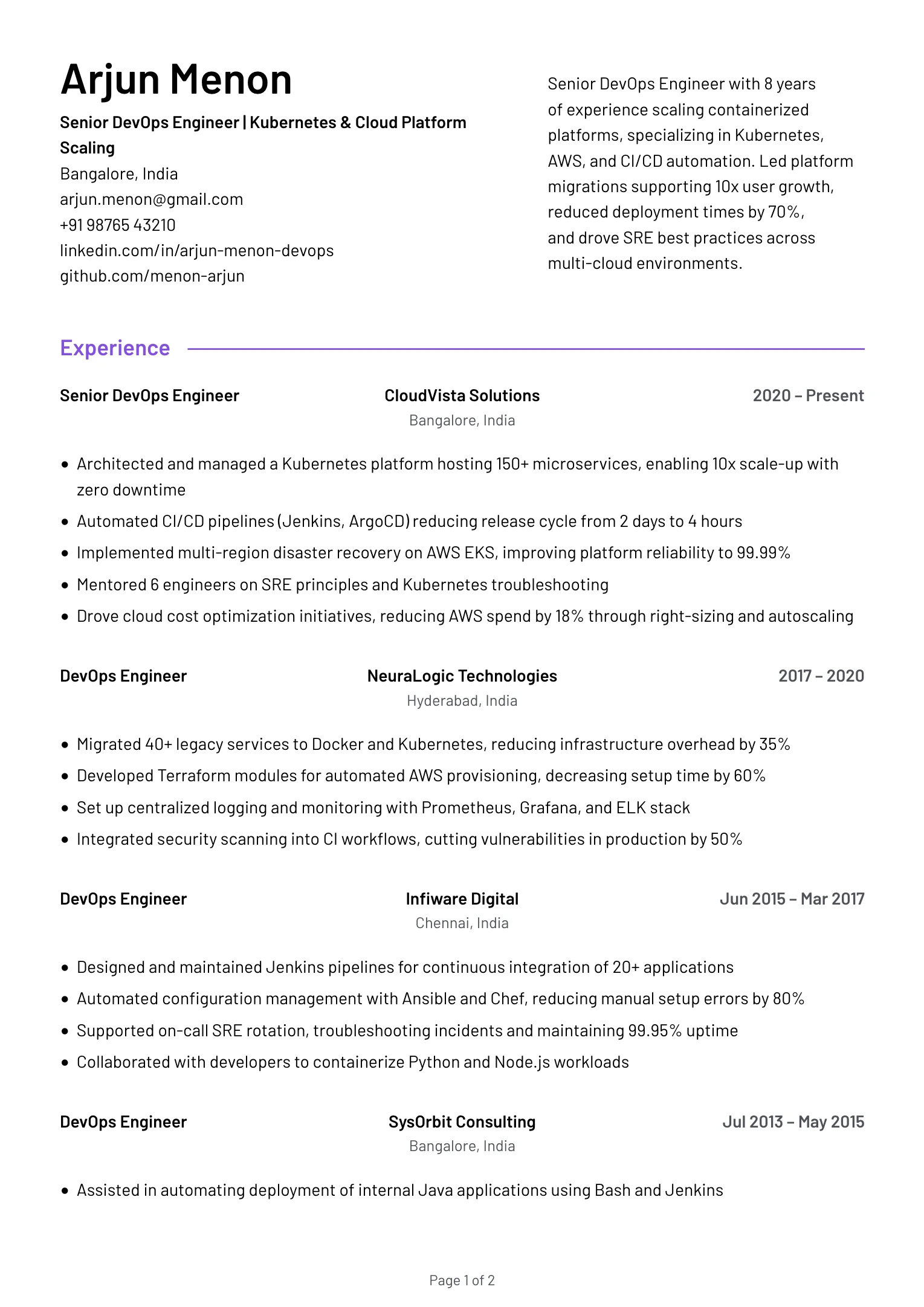
No. A resume has no required headings. If you have nothing formal to list, remove the section rather than filling it, and let the rest of the page carry the weight. Put your GitHub and portfolio links in the header, next to your email, so the work is one click away.
The two common mistakes go in opposite directions. The first is a heading with "Self-taught" under it, or a short paragraph explaining your path. That gives the reader a sentence to judge instead of a fact, and it uses space your projects could use. The second is padding the section with every course you started.
The summary does not need the word either. "Frontend developer with 4 years of React and TypeScript" says more than "Self-taught frontend developer". Keep the story for the interview, where it takes one sentence: "I don't have a degree. I learned on my own, built a few apps for clients, and got my first engineering job in 2020."
If you have a current cloud or Kubernetes certification, a short Certifications section can take the place of Education. That is covered further down.
How to list an unfinished computer science degree
List it, and make it clear that it is unfinished. A common suggestion is to write the university, the subject and the dates. That looks reasonable, but the result is identical to a completed degree:
Before:
University of Leeds
BSc Computer Science | 2016 – 2018
After:
University of Leeds
BSc Computer Science, two years completed | 2016 – 2018
- Coursework included data structures, algorithms, databases and operating systems
A reader sees "BSc Computer Science" next to an end date and assumes you graduated. Software that extracts a degree and a graduation year from the text has no way to know otherwise either.
You did not claim a degree, but the resume says you have one. Employers often verify education in a background check after an offer, and a mismatch found at that stage can put the offer at risk.
Other honest wordings work too: "Coursework toward BSc Computer Science" or "Computer Science (BSc), left in 2018 to work full time". Pick one and use the same words on your LinkedIn profile. Years without months are normal for education entries, so "2016 – 2018" is fine here.
Write "expected" only if you are enrolled now. If you study part-time while working, say so and show the full range:
The Open University
BSc Computing and IT (part-time) | 2022 – 2027 (expected)
You do not need to give a reason for leaving on the resume. If you left to take an engineering job and it started soon after, the experience section already shows it.
How to list a degree in an unrelated subject
List it plainly, on one line, like any other degree. A chemistry or economics degree is still a completed degree. It answers the "degree required" question in many job ads, and it shows you finished several years of serious study.
University of Glasgow
BSc Chemistry | 2011 – 2015
Do not rename it or describe it as something close to computer science. Add a second line only when part of the degree is relevant to the job you want, and name the technical part:
University of Glasgow
BSc Chemistry | 2011 – 2015
- Final project: simulated reaction kinetics in Python with NumPy and SciPy
This works well for data, scientific computing and fintech roles, where a quantitative degree is often seen as a plus. For a frontend role, the one-line version is enough. Do not list unrelated courses to make the section look longer.
Where a bootcamp goes, and when to shrink it
A bootcamp goes under Education. It was training you took, not a job you held. Give the provider, the program name as it appears on your certificate, the dates and whether it was full-time:
Northcode Academy, London
Software Engineering Bootcamp, full-time (16 weeks) | Jan 2022 – Apr 2022
Never put a bootcamp in the experience section, and never give yourself a job title for it. An entry like "Software Engineer, Northcode Academy" reads as employment, and the reader will ask who paid you to build what. The exception is a paid role at the bootcamp itself, such as a teaching assistant job after you graduated. That is real employment and goes in Experience with its real title.
Projects you built during the bootcamp go in a Projects section, labeled as bootcamp work. Group projects should say which part you built:
Projects
Tablebook (bootcamp final project, team of 4)
- Built the booking calendar in React and TypeScript, including keyboard navigation between time slots
- Wrote the component tests in Testing Library that ran in GitHub Actions on every pull request
After your first engineering job, the job becomes the main evidence. Shrink the bootcamp material in this order:
- When you start the job, keep the bootcamp entry and one or two of the strongest bootcamp projects.
- After about a year, remove the bootcamp projects. Production work has replaced them.
- After two years or so, reduce the bootcamp to a single line under Education, or remove it.
Here is the same person in 2026, four years after the bootcamp:
Larkspur Health, Manchester
Frontend Developer | Jun 2023 – Present
- Rebuilt the appointment booking flow in React and TypeScript, used by 30 clinics
Junior Frontend Developer | Jun 2022 – May 2023
- Built shared form components with accessibility tests in Testing Library
Education
Northcode Academy, Software Engineering Bootcamp | 2022
We recommend keeping that last line when it is your only training entry. A reader who wonders how you started gets the answer without asking.
Do Udemy, freeCodeCamp and Coursera certificates belong on a resume?
Mostly not as certificates. A completion certificate for a self-paced video course tells the reader little about what you can build, and a long list of them can make you look earlier in your career than you are. What you built with the course is the stronger evidence.
Sort what you have into three groups:
- Self-paced video courses (most Udemy and YouTube courses, and short Coursera courses). Leave them off. If a course led you to build something, list the thing you built in Projects.
- Project-based certifications such as freeCodeCamp's older certifications, which you earn by building a set of required projects. List the best one or two projects, with links. freeCodeCamp announced new certifications that add a proctored exam and say its legacy certifications expire at the end of 2027, so check which kind you hold.
- Proctored, exam-based certifications from AWS, Microsoft Azure, Google Cloud or the Linux Foundation (for example, its Kubernetes exams). These are worth listing, especially for cloud, DevOps and security roles, where job ads often name them.
Certifications
AWS Certified Developer – Associate | 2025
Certified Kubernetes Administrator (CKA) | 2025
Most of these certifications expire after a few years. List the ones that are current, and remove or renew the rest. If the provider gives you a verification link, put it on LinkedIn rather than on the resume.
A long online program with graded work earns one line under Education when it is relevant to the role. Examples are Harvard's CS50x or a set of university modules you completed for credit. Give the institution, the program and the year, and stop at one or two such entries.
Where the education section goes
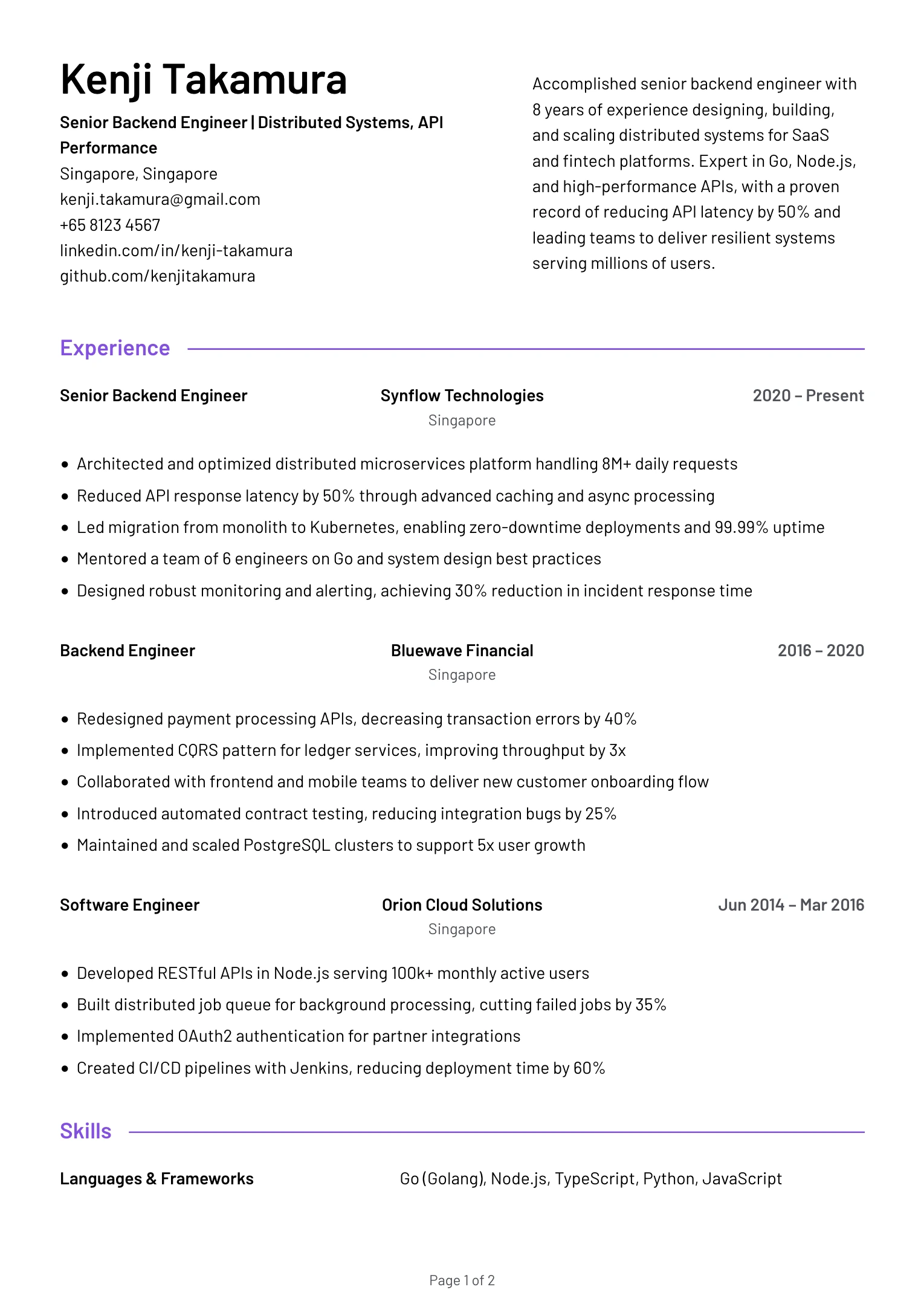
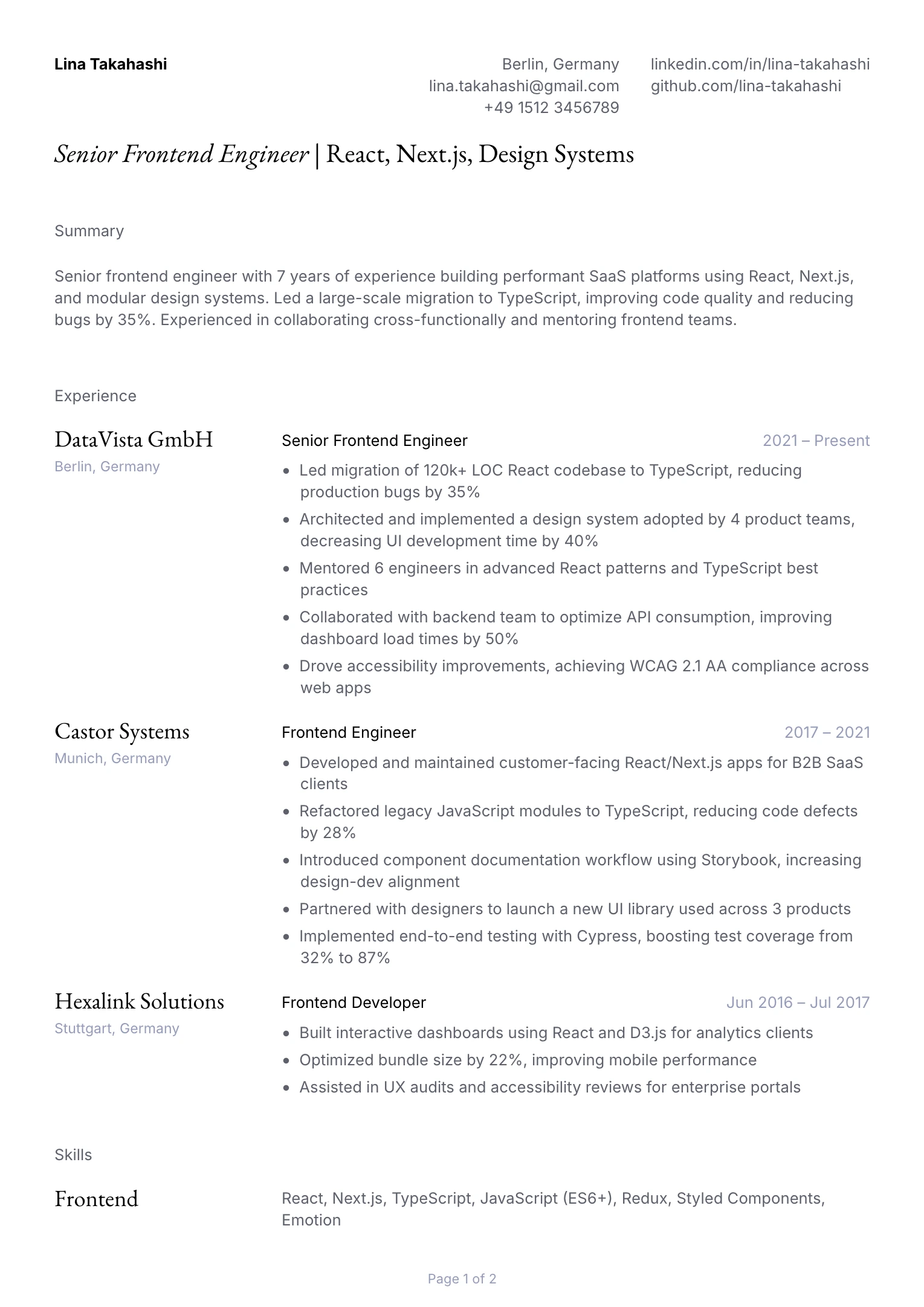
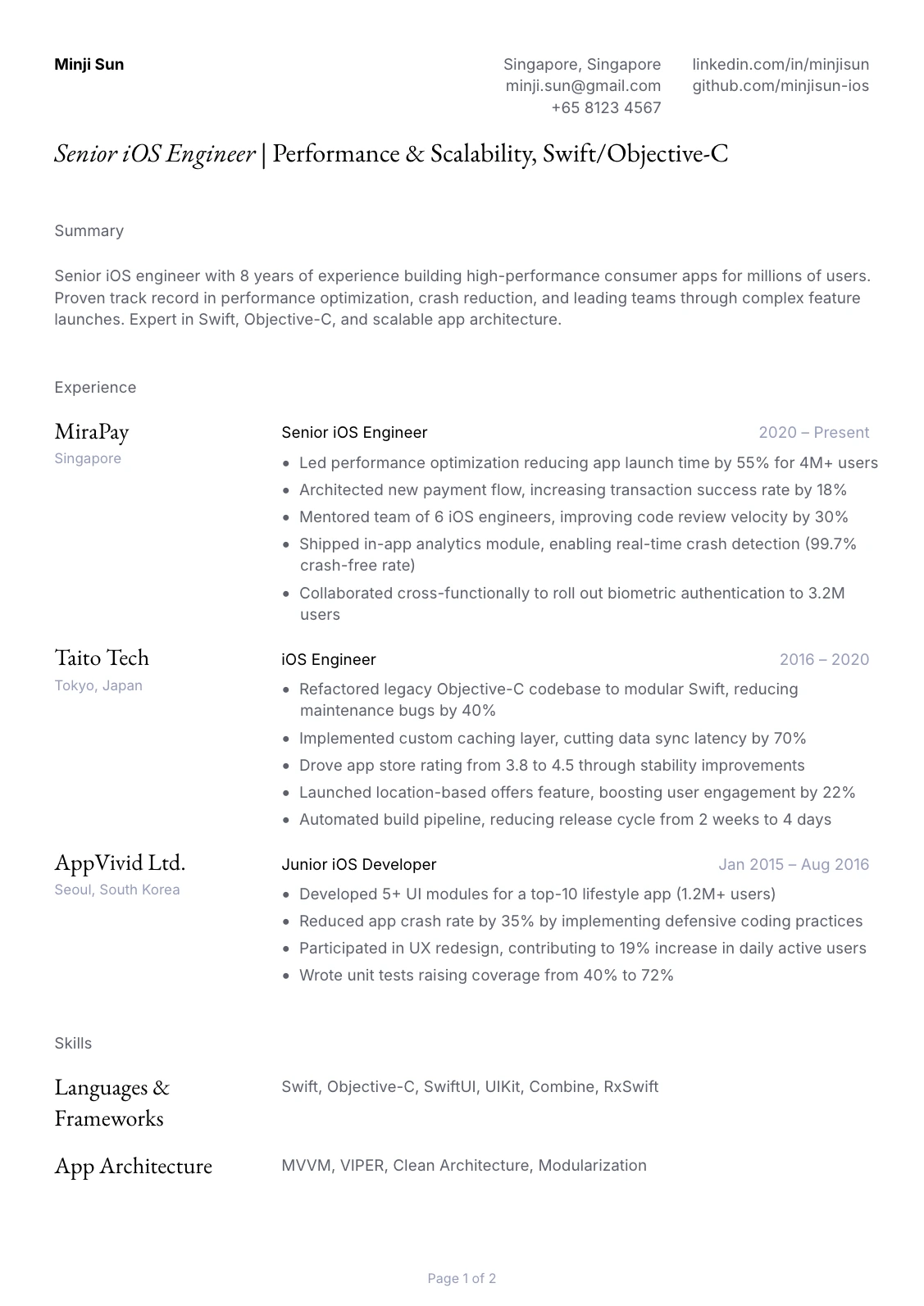
At the bottom, after Skills. The junior frontend developer example and the junior backend developer example on this site both use this order, even though both people have computer science degrees: Summary, Experience, Projects, Skills, Education.
For a self-taught developer the order matters more. A reader who reaches your education has already read about your work and projects. With education at the top, it would be the first thing they judge you on.
With no engineering job and no projects yet, moving education higher does not solve the problem. Build one project you can show and link to, then send the resume.
By the senior level, the section is one or two lines even for people with degrees. The senior backend engineer example gives the degree, the university and the years, with a single line below. Your entry should be no longer than that.
How to answer a required degree field on an application form
Pick the closest true option. Many forms have a required "highest level of education" field. Select what you actually have: high school, "some college", or "Other". Never select a bachelor's degree you do not hold.
Forms often ask you to confirm that your answers are accurate. They are also a record a background check can compare against. A false answer is easier to find there than on the resume.
If there is a free-text field, give the facts in one line:
No degree. Software Engineering Bootcamp, Northcode Academy (2022). 4 years as a frontend developer.
Two years of BSc Computer Science, University of Leeds (2016 – 2018). 8 years as a backend engineer.
Many engineering job ads say "degree or equivalent experience". With professional experience, apply. When an ad says a degree is strictly required, you can still apply with accurate answers. Some companies apply the requirement less strictly than the ad suggests, and some do not.
Some work visa routes and some regulated employers do set rules on qualifications. That is an immigration or compliance question, not a resume question. Check the official government guidance for the country, or ask the employer's recruiter.
Put it into practice
Build your resume in Filiz and watch the PDF update as you edit. Start from scratch, import your current resume, or begin with an example. No sign-up needed to try it.
Frequently asked questions
Should I write "dropout" on my resume?
No. The word describes how you left, not what you learned, and it reads as a label. State the amount you completed instead, such as "two years completed" or "coursework toward BSc Computer Science". If an interviewer asks why you left, one factual sentence is enough.
Does a bootcamp go under education or experience?
Education, even when it was full-time and project-heavy. A bootcamp is training. Its projects go in a Projects section labeled as bootcamp work, and they leave the resume once you have a year or so of professional work to show.
Should I list high school if I have no degree?
Usually not. Once you have professional engineering experience, a high school entry adds nothing a reader uses, so leave the section off. Give your high school details only where an application form asks for your highest level of education.
Will leaving out education get my resume filtered out?
It can, at employers that filter on a degree field. An accurate resume cannot change that, and a vague education entry does not help either, because the form asks the question separately. Spend your applications on roles that accept experience instead of a degree, which many engineering job ads state directly.